AI can recommend your product, but can it make people want your brand?
Part 2 of 3 | Adding substance to health, beauty and wellness brands
Welcome to part two of our series on what it takes to build a brand people choose, as looking good, feeling good and living well blur together.
Imagine this scenario… It’s half-ten on a dark winter’s night and a shopper wants a vitamin D supplement. Instead of asking a pharmacist or comparing labels, they ask an AI assistant which one is right for them. It answers in seconds, tells them what to buy and why, and points them to where it’s cheapest. The shopper hasn’t seen a single piece of brand content yet.
Buying something new always comes with a little doubt, health and beauty purchases come with more than most. Is this the right supplement for me? Will this shade match? Can I trust what it says on the pack?
That doubt has always worked in brands’ favour. When people aren’t sure, they turn to a name they trust, and the reassurance comes with the product: the advice in store, the expert or famous face in the advert, the before-and-after, the brands you already know.
How AI is changing beauty product discovery
That reassurance is now available on demand. 64% of UK adults have used AI search tools to guide their beauty purchases in the last six months, according to Boots’ 2026 Beauty and Wellness Trends Report. That’s nearly two in three people checking with AI before they’ve looked at your brand.
Shoppers research, compare and decide in tools like ChatGPT, Gemini and Perplexity, or in the AI answers at the top of Google. As Target Internet’s podcast points out, many now reach your site much further along the buying journey, often with their minds already made up. Your website has become where they check out, not where you win them over.
AI is also changing how people experience products before they buy. L’Oréal has partnered with OpenAI to bring Maybelline’s virtual try-on into ChatGPT, so even trying products on is moving into the chat.
Whichever tool they use, AI will tell shoppers which shade, which serum, which routine. And it’ll do it for any product on the shelf, from your biggest rivals to cheaper lookalikes of yours. AI builds its answers from what brands publish: product pages, descriptions, claims and ingredient lists. It just sums it up in its response, alongside your competitors’.
There’s a catch, and it matters. AI doesn’t give everyone the same quality of answer.
PwC has highlighted how beauty AI trained on Western-centric datasets can struggle to represent diverse skin tones accurately. This can lead to unreliable shade matching and virtual try-ons that don’t always reflect how products look in real life. If the tools shoppers rely on work better for some people than others, the advice they receive isn’t equally useful.
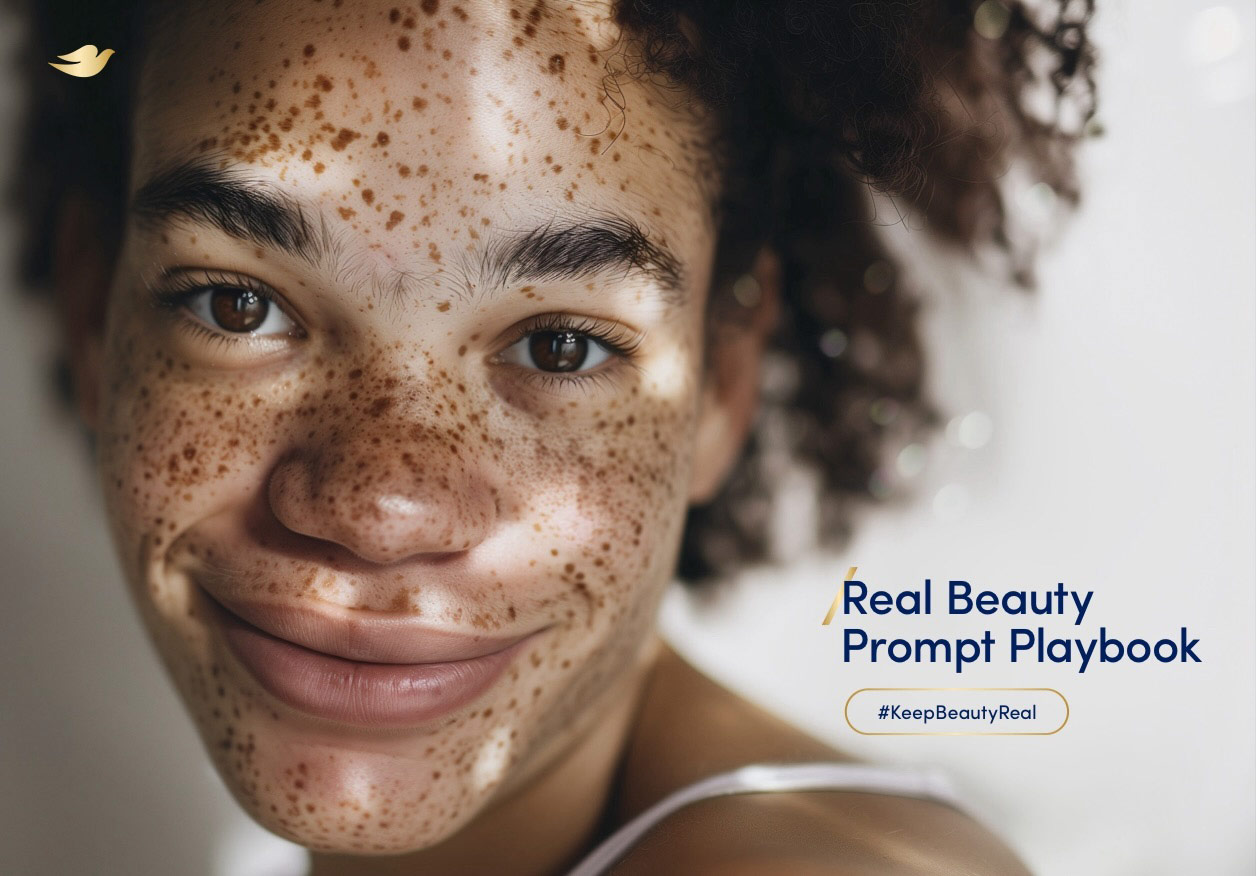
Dove turned that gap into trust. It created its Real Beauty Prompt Playbook, with simple guidance on getting more diverse, realistic images of people from generative AI tools, and committed never to use AI to create or distort images of women. That doesn’t mean avoiding AI. It means being clear about where you use it, and where authenticity sits within your brand guidelines.
Image: Dove’s Real Beauty Playbook campaign
When your formula is your brand, you’re easy to replace
For years, health and beauty has taught shoppers to judge a product by its formula. The Ordinary made it mainstream with 10% niacinamide and 2% salicylic acid on the front of the pack, and supplement brands followed, putting the dose front and centre on the label.
It worked. Shoppers got clued up and more confident in what they were buying. But a formula is easy to summarise. When AI boils your brand down to its ingredients, a brand built on specs is easy to replace. Ingredients still matter, but with every formula now just a search away, they’re the minimum shoppers expect.
So what can marketing teams do? The instinct is to reach for AI and make more: more ads, more variants, more posts. But more content built on the same specs just gives AI more of the same to summarise. And in a category where people buy on trust, generic, over-polished content can erode the trust you’ve built, whoever or whatever made it.
The answer isn’t more content, or less AI. Used well, AI helps brands create more distinctive creative content, faster. What matters is giving shoppers a reason to choose your brand that goes beyond the AI summary.
Where to start
- Take the ingredients off your pack. What’s left? Think about your brand’s personality, visual identity and the experience you offer. If shoppers can’t tell you apart from a competitor without seeing the ingredients or logo, that’s where you need to focus.
- Ask AI the questions your customers ask. See how AI recommends your products, explains their benefits and compares them with competitors. Check the responses for accuracy, brand consistency and gaps in information, then make sure your product pages address them clearly.
- Test your own tools. If you use a shade matcher, skin analysis or product quiz, check it works for every shopper you serve, whatever their skin tone, age or needs. If it only works well for some, it isn’t working well enough.
- Get the basics consistent. Start with your hero products. Their name, description and imagery should match everywhere, retailer sites included, so AI picks up the right version.
- Let customers do the talking. Encourage reviews that say who’s using the product and how it fits into their routine, whether that’s their skin type, their age or when they take it. AI repeats what real customers say, so the more specific reviews are, the better.
- Invest in what AI can only describe. Spend less on more versions of the same content, and more on distinctive imagery and a brand world worth being part of. AI-generated imagery can do a lot of that work, as long as real people, whether models, creators or your own customers, still feature in your campaigns.
Make your brand worth searching for
At Ride Shotgun, we bring creativity and smart production together to build distinctive brand experiences, create content that connects with real people and deliver it consistently across every touchpoint. That starts with the brand: the identity, packaging and campaign ideas people recognise. Then we choose the right mix of photography, CGI and AI-generated content to bring it to life.
Talk to a human about where AI fits in your brand creative and content.
Coming soon: Wellness is a habit, so why sell it like a trend?
Missed part one in the series? Read Being duped isn’t the problem, being forgettable is.