Interior Design Trends 2026: The consumer behaviour shifts behind them
Posted - 17.03.26
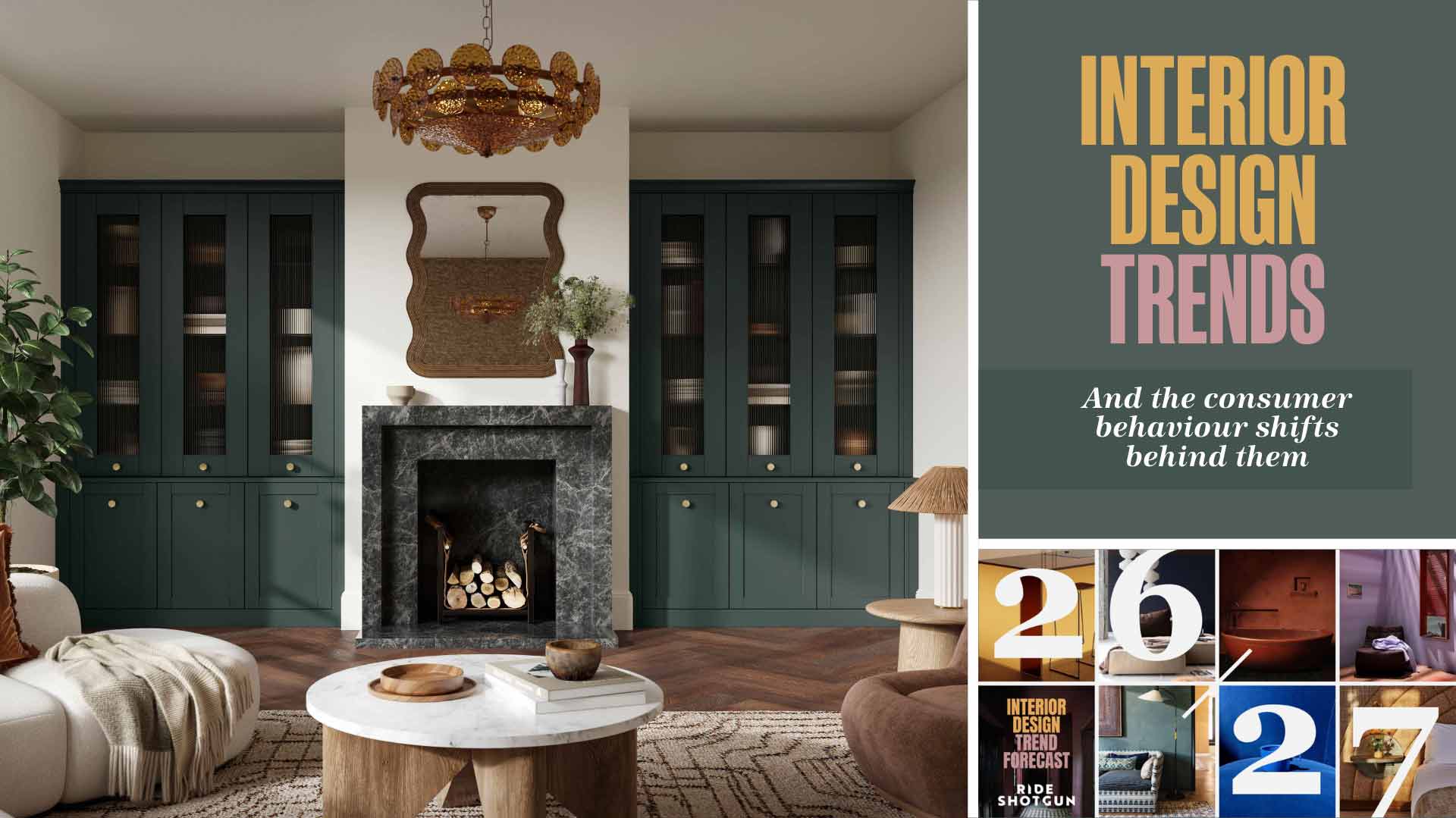
Interior trends don’t just randomly pop out of nowhere. Much more than the latest ‘buzz’ colours, they are visual responses to deeper cultural, emotional and behavioural change. The themes shaping interiors through 2026 reflect evolving consumer priorities across retail, lifestyle and digital spaces.
Right now, four behavioural shifts are shaping how interiors look and how consumers choose products. We’ve mapped how they translate into colour, finish and form in our accessible (and must-have) 26/27 Interior Design Forecast.
1. The Rise of the emotional home
Purchase decisions are increasingly guided by emotional impact, not just plain old functionality. For interiors, that shows up in deliberate choices around colour, texture and atmosphere that support mood, comfort and mental wellbeing.
This shift reflects a desire for stability in an uncertain, overstimulated world. The home is being repositioned as a place of safety and recovery. Think, ‘Home Sweet Home’ or, as Dulux Creative Director and colour expert Marianne Shillingford explains:
We were returning to a sense of what home and stability and safety felt like and what that might look like.
Environmental psychology consistently shows that colour and materiality can influence emotional state. That’s why the 2026 palettes are built around mood and feeling:
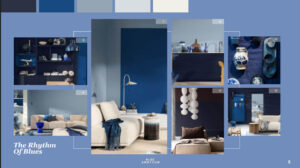
- Rhythm of Blues: soothing, restorative tones for reflection and reset.
- Transformative Teal: balanced hues that support clarity and calm.
- Dusky Fig: deeper, enveloping shades that create comfort and security.
What does this mean for marketing and product teams? Consumers are not just choosing finishes. They’re choosing feelings. The brands that win in this space frame products around emotional outcome, not only the spec sheet.
Want to take a deeper dive? Our podcast with Marianne Shillingford, examines how colour psychology shapes the home and how brands can apply it across messaging and advertising, listen here.
2. Design as self-expression
Homes have become an expression of self. Not in a glossy, show-home way, but in the details people choose to live with every day.
Interiors are increasingly used to express our identity, values and taste. Design is no longer just about a cohesive look. It’s about making a space feel like it’s truly yours. As Marianne Shillingford puts it,
People are surrounding themselves with things that tell a story about themselves.
- Hyper Individualism: prioritising personal narrative over polished uniformity
- New Deco: reworked heritage glamour, confident, characterful and a little indulgent
- Accent ceilings and patterned headboards: high-impact upgrades that still feel achievable
One-size-fits-all styling doesn’t cut it anymore. Consumers want room to adapt, layer and personalise. For brands, that means moving beyond rigid collections and toward ranges that feel modular, mixable and open to interpretation.
When people see their homes as extensions of themselves, the role of the brand shifts too, from dictating taste to enabling it.
3. Why handmade cues are winning
Mass-produced sameness has got too, well, samey. Shoppers are rewarding brands that can prove where things come from and how they’re made.
According to McKinsey’s State of the Consumer 2025 report, 47% of consumers say buying from locally owned companies is important to their purchase decisions. Their consumer research shows sustainability continues to play a central role in purchasing decisions, even as value for money remains paramount. (McKinsey)
In home categories, that blend of value plus values is showing up as renewed appetite for visible craft, material honesty and longevity. That’s where Handmade Heritage is gaining ground. It shows up through:
- Tactile surfaces that add depth, warmth and a lived-in feel
- Natural finishes that celebrate grain, variation and texture
- Little details that make it feel made, not mass made
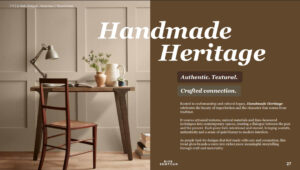
In a world of digital speed and short product cycles, tangible quality signals care and permanence. Craft becomes shorthand for value.
For brands, the takeaway is simple: if craft is part of your value, make it visible. Let materials, finish and construction do the persuading, supported by content that shows process and detail up close. When quality is easy to see, shoppers feel more confident, price becomes easier to justify, and loyalty grows from trust rather than promos.
Social and search now set the style agenda
Interior trends are no longer discovered in magazines first. They’re discovered in feeds.
In fact, research shows half of furniture buyers now begin their inspiration phase on social platforms like Instagram, Pinterest and TikTok weeks or even months before they purchase (Elle Decor, 2025).
Pinterest alone has over 537 million monthly active users, with 89% of users turning to the platform for purchase inspiration and 98% discovering new ideas there (Our Own Brand, 2025).
Platforms like TikTok and Instagram accelerate the cycle further through short-form video formats such as before-and-after transformations and mini home makeovers, which rapidly spread new aesthetics and ideas (Honest Communications, 2024).
Pinterest, Instagram and TikTok have become the front door to inspiration.
If a product doesn’t stop the scroll, it doesn’t make the shortlist.
And it’s not just social. Increasingly, visual content surfaces in search too, meaning imagery, captions and keywords influence discovery well beyond the feed.
That is why high-contrast colour and visually distinctive finishes are rising:
- Electric Blue: a bold pop of colour designed to stand out on screen and in real life.
- Technocraft: iridescence, transparency and layered surfaces that catch light and camera.
These are not only aesthetic choices. They are performance choices. They look strong in real spaces and even stronger in photography, video and ecommerce.
For brands, the shift is straightforward: the feed is now the moodboard. Products need to communicate a style story instantly, with finishes and colour that read at a glance and hold up in real homes. Design for visual impact first, and you earn a place in the inspiration cycle that shapes what people buy later.
What interior design trends say about consumer behaviour
Interior trends are rarely about style alone. They are expressions of how people want to feel, how they want to be seen and how they want to live. It really is a ‘feeling’.
For marketing and product teams, that changes the job. It is no longer enough to respond to colour shifts or surface finishes. The competitive edge comes from understanding the behaviour driving them and translating it into smarter range decisions, clearer positioning and content that earns attention.
When you read trends as behavioural signals, you move from reacting to anticipating. Instead of chasing colours and finishes, you can build ranges, messaging and content around the needs shaping how people live now, and stay relevant for longer.
Download the Interior Design Forecast
Our 26/27 Interior Design Forecast maps the creative shifts shaping the category. Pair it with the behavioural insight in this article to turn inspiration into action.
Download the forecast, or talk to us about applying these shifts to your next brief.